
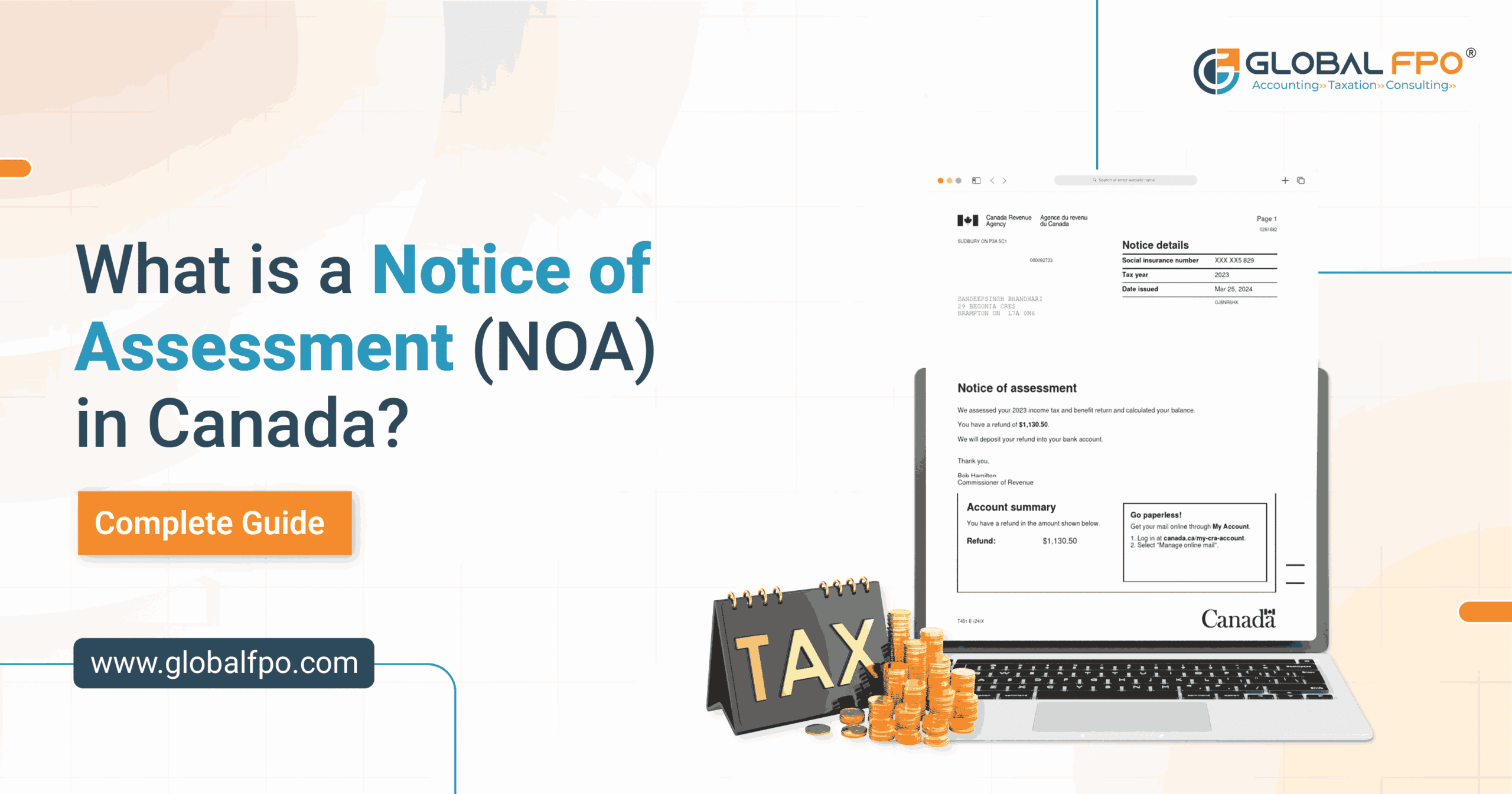
If you file taxes in Canada, the Notice of Assessment is one document that carries more weight than most people realize. It is not just a confirmation that your return was processed. It is the Canada Revenue Agency’s final word on your tax situation for the year.
Understanding what a Notice of Assessment is helps you move beyond basic compliance. It gives you clarity on refunds, tax liabilities, and future planning decisions. If you overlook it, you risk missing errors, delays, or opportunities to optimize your finances.
What Is a Notice of Assessment?
A Notice of Assessment is an official statement issued by the Canada Revenue Agency (CRA) after they review your tax return. It summarizes the outcome of your filing, including your income, deductions, credits, and final balance.
In simple terms, it tells you three things: whether you owe money, whether you will receive a refund, or whether your account is settled. But the role of the Notice of Assessment Canada goes far beyond this basic summary.
It acts as a verified financial record that reflects CRA’s assessment of your tax position. This makes it a critical document not only for tax purposes but also for financial applications like loans, mortgages, and immigration processes.
Why is the Importance of Notice of Assessment in Canada?
Most taxpayers focus heavily on filing their returns but pay very little attention to the outcome. That is where problems begin. The Revenue Canada Notice of Assessment is where accuracy is confirmed, and decisions are finalized.
Before getting into specifics, here is the broader perspective. Filing your tax return is your input. The NOA is the system’s validated output.
- It confirms whether your calculations were accurate or adjusted
- It determines your exact refund or outstanding balance
- It updates your RRSP contribution limit for future planning
- It influences eligibility for government benefits and credits
- It serves as official proof of income
Ignoring your Notice of Assessment is like submitting a report and never checking the feedback. You lose visibility into what actually changed.
What Does a Notice of Assessment Include?
The structure of a Notice of Assessment Canada is designed to provide a complete breakdown of your tax position. Each section gives you a different layer of insight, and understanding them helps you avoid costly mistakes.
Account Summary
This is the first section you will see, and it provides a quick snapshot of your tax outcome. It shows whether you are receiving a refund, need to pay a balance, or have no amount due. It also includes the payment deadline if you owe money.
Tax Calculation Details
This section explains how your final numbers were calculated. It includes your total income, taxable income, and the taxes applied at both federal and provincial levels. You will also see the credits and deductions that were used to reduce your tax liability.
CRA Adjustments
If the CRA makes any changes to your submitted return, they are listed here. This could include disallowed deductions, corrected income figures, or updated credits. Understanding this section is critical because it tells you where your original filing differed from CRA’s assessment.
RRSP Deduction Limit
One of the most valuable parts of the Notice of Assessment is the RRSP contribution limit for the next year. This figure helps you plan tax-saving investments and avoid over-contributions, which can lead to penalties.
Additional Information
This section includes carry-forward amounts such as unused tuition credits or capital losses. It may also contain installment reminders if you are required to make advance tax payments in the future.
Reading your Notice of Assessment Canada carefully ensures that you are not just informed about your current taxes but also prepared for future financial decisions.
How to Get Notice of Assessment?
Most taxpayers receive their NOA automatically after filing, but knowing how to get a Notice of Assessment is essential if you need access later.
The most efficient way is through the CRA’s online portal. Once your return is processed, you can log in to your account and download the document instantly. This method also allows you to access previous years’ assessments, which can be useful for financial verification or audits.
- Log into CRA My Account
- Navigate to the tax returns section
- Select the relevant year
- Download your Notice of Assessment
If you prefer a physical copy, you can request one by mail, although this takes longer. For businesses or individuals managing multiple filings, relying solely on manual retrieval can become inefficient. This is where centralized systems help streamline document access and tracking.
When Do You Receive a Notice of Assessment?
The timing of your Notice of Assessment Canada depends on how you file your return. Electronic filing is significantly faster than paper filing, but there are other factors that can affect processing time.
| Filing Method |
Expected Timeline |
| Electronic filing |
Around 2 weeks |
| Paper filing |
Up to 8 weeks |
| Returns under review |
Longer, depending on complexity |
Delays usually happen when additional verification is required. This can be triggered by missing information, inconsistencies in reported income, or flagged deductions. Filing multiple years together can also slow down processing.
So if your Notice of Assessment takes longer than expected, it is often due to review processes rather than system inefficiencies.
How Long After Notice of Assessment Do You Get a Refund?
A common question taxpayers ask is how long after the Notice of Assessment do you get a refund? The answer depends on how you receive your payment and whether your return is under review.
Here is how the process typically works. Once your return is assessed and the NOA is issued, the refund process is initiated immediately.
- Direct deposit refunds usually arrive within a few days
- Cheque payments take longer due to mailing time
- Additional verification can delay the refund
The key point is that refunds are tied to assessment completion, not the filing date. Setting up direct deposit is the fastest way to receive your refund after your Notice of Assessment Canada is issued.
What If There Is an Error in Your Notice of Assessment?
Even though CRA systems are highly accurate, errors can still occur. These may arise from incorrect reporting, missing documents, or misunderstandings of deductions.
If you notice a discrepancy in your Revenue Canada Notice of Assessment, the first step is to compare it with your original return. Look for differences in income, deductions, or credits.
If the issue is clear, you can file a T1 Adjustment request to correct the information. If you disagree with CRA’s assessment, you can file a formal objection within 90 days.
Taking prompt action is important because unresolved errors can lead to penalties, interest charges, or incorrect financial records.
What are the differences between a Notice of Assessment vs Notice of Reassessment?
Many taxpayers confuse the initial NOA with a reassessment. While they look similar, they serve different purposes.
| Feature |
Notice of Assessment |
Notice of Reassessment |
| Issued when |
After first filing |
After changes or corrections |
| Purpose |
Confirms original return |
Updates previous assessment |
| Trigger |
Filing your return |
CRA review or taxpayer request |
| Outcome |
Initial tax result |
Revised tax result |
A reassessment is issued only when there is a change after the original Notice of Assessment Canada, either initiated by you or by the CRA.
What are the Common Mistakes People Make with Notice of Assessment?
Most issues with tax documents are not due to complexity but due to a lack of attention. People often assume that once they file their return, the job is done.
Before listing them, here is the pattern. The majority of mistakes come from skipping the review stage.
- Not checking CRA adjustments carefully
- Ignoring RRSP contribution limits
- Overlooking refund discrepancies
- Failing to save copies for future use
- Missing deadlines for objections or corrections
A thorough review of your Notice of Assessment takes only a few minutes but can prevent long-term financial issues.
How Businesses and Global Teams Handle Canada’s Notice of Assessment
For individuals, managing a single NOA is straightforward. For businesses and global teams, especially those handling multiple employees or entities, the process becomes more complex.
The main challenge is fragmentation. Tax documents are often stored across different systems, making it difficult to track and retrieve them when needed.
- Multiple filings across jurisdictions
- Manual tracking of documents
- Delays in accessing records
- Increased risk during audits
Consolidating financial data and tax documents in one place, it reduces errors and improves visibility. This becomes especially important for organizations managing cross-border operations where compliance requirements are more demanding.
How to Use Notice of Assessment for Smarter Tax Planning
Most people treat their NOA as a final document. In reality, it is a starting point for better financial planning.
When you review your Notice of Assessment Canada strategically, you can use it to optimize your next tax cycle.
- Plan RRSP contributions based on updated limits
- Track unused credits and carryforwards
- Analyze income patterns to manage tax liability
- Prepare for installment payments if required
This approach shifts your mindset from reactive filing to proactive financial management.
Why the Notice of Assessment Deserves Attention
The Notice of Assessment is not just a tax summary. It is the Canada Revenue Agency’s final confirmation of your financial position for the year.
Understanding what a Notice of Assessment is helps you track refunds, catch errors, and plan future taxes more effectively. Ignoring it can lead to missed adjustments or compliance issues.
For businesses handling multiple filings, managing every Notice of Assessment Canada manually can quickly become inefficient. This is where structured support matters. A partner like Global FPO helps streamline document tracking, improve visibility, and ensure compliance across teams.
At its core, the Notice of Assessment is a decision-making tool. Using it well puts you in control of your financial outcomes.
FAQs
1. What is a Notice of Assessment in Canada?
A Notice of Assessment is a CRA-issued document summarizing your processed tax return, confirming income, taxes, and final balance or refund status.
2. What does a Revenue Canada Notice of Assessment show?
A revenue Canada Notice of Assessment shows your income, tax calculations, credits, deductions, RRSP limits, and any adjustments made by CRA.
3. How to get Notice of Assessment online?
You can get your Notice of Assessment by logging into CRA My Account, accessing tax returns, and downloading the latest assessment instantly.
4. How long after Notice of Assessment do you get a refund?
After your Notice of Assessment, refunds are typically issued within a few days if direct deposit is set up, otherwise longer by mail.
5. Can I correct errors in my Notice of Assessment Canada?
Yes, you can correct errors in your Notice of Assessment Canada by filing a T1 Adjustment request or submitting a formal objection within 90 days.
6. Is a Canada Notice of Assessment accepted as proof of income?
The Canada Notice of Assessment is widely accepted as official proof of income for loans, mortgages, rentals, and immigration applications.
7. Why did CRA change my Notice of Assessment?
CRA may change your Notice of Assessment due to missing information, incorrect claims, verification processes, or adjustments to reported income and deductions.
8. What happens after receiving a Notice of Assessment?
After receiving your Notice of Assessment, you will either receive a refund, pay any balance owing, or review CRA adjustments for further action.
9. How does Global FPO help manage Notice of Assessment documents?
Global FPO helps businesses manage Notice of Assessment documents by centralizing records, improving tracking, and ensuring timely review across teams and processes.
10. Can Global FPO support compliance for Notice of Assessment Canada?
Yes, Global FPO supports compliance with the Notice of Assessment Canada by streamlining documentation, maintaining audit trails, and improving financial reporting accuracy.