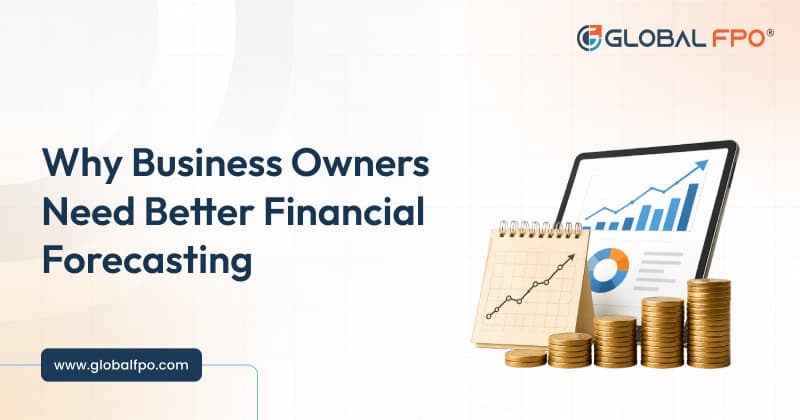
Financial forecasting helps businesses look beyond historical reports and make informed decisions about the future. Instead of relying on assumptions, a financial forecast estimates future revenue, expenses, cash flow, and profitability using historical financial data, current business performance, and realistic assumptions.
Whether a business is planning to expand, secure financing, hire new employees, or simply maintain healthy cash flow, accurate forecasting provides the financial visibility needed to move forward with confidence.
More importantly, forecasting is not about predicting the future with absolute certainty. It is about preparing for different possibilities so business owners can respond proactively rather than reactively.
What Is Financial Forecasting?
Financial forecasting is the process of estimating a company’s future financial performance based on historical results, market trends, and business assumptions.
A comprehensive financial forecast typically projects:
These projections help business owners understand where the business is heading and whether strategic goals are financially achievable.
Why Is Financial Forecasting Important for Small Businesses?
Business decisions often have long-term financial consequences. Hiring additional employees, investing in equipment, expanding into new markets, or launching a new product all require confidence that the business can support those decisions financially.
Financial forecasting replaces guesswork with measurable insights.
With better forecasting, businesses can:
- Anticipate cash flow shortages before they occur
- Allocate resources more effectively
- Evaluate different growth scenarios
- Improve financial planning
- Strengthen funding applications
- Respond faster to changing market conditions
Rather than asking, “Can we afford this today?”, forecasting helps answer, “Can we still afford this six months from now?”
What Should a Financial Forecast Include?
One common misconception is that forecasting simply means predicting future sales.
In reality, revenue is only one part of the equation.
Reliable forecasts also consider:
- Payroll expenses
- Vendor payments
- Inventory purchases
- Loan repayments
- Tax obligations
- Customer payment cycles
- Planned capital investments
For example, a business may forecast a significant increase in sales over the next quarter. However, if most customers pay invoices 60 days after purchase, cash flow could still become constrained despite higher revenue.
Looking at revenue alone rarely provides the complete financial picture.
What Data Is Needed for Financial Forecasting?
Accurate financial forecasting starts with reliable financial data. To build a meaningful financial forecast, businesses need:
- Up-to-date bookkeeping
- Accurate financial statements
- Reconciled accounts
- Consistent expense categorization
- Reliable historical data
Strong accounting creates the foundation for better forecasting. Without accurate financial data, even the most sophisticated forecasting model can produce misleading results.
What Are the Common Financial Forecasting Methods?
Different business goals require different financial forecasting methods. Choosing the right approach depends on the decisions the forecast is intended to support.
| Forecasting Method |
Best Used For |
| Trend Analysis |
Identifying long-term revenue or expense patterns |
| Cash Flow Forecasting |
Managing short-term liquidity |
| Scenario Planning |
Evaluating different business outcomes |
| Three-Statement Forecasting |
Funding, budgeting, and strategic planning |
| Rolling Forecasts |
Continuous financial planning throughout the year |
Many businesses combine several methods rather than relying on a single approach.
What Are the Common Financial Forecasting Models?
Different financial forecasting models help answer different business questions.
For example:
- Cash flow models estimate future cash inflows and outflows.
- Three-statement models connect the income statement, balance sheet, and cash flow statement to project overall financial performance.
- Scenario models compare best-case, expected, and worst-case outcomes.
- Driver-based models forecast results using key business metrics such as customer growth, pricing, or production volume.
Selecting the right model depends on the complexity of the business and the decisions being evaluated.
What Are the Common Forecasting Mistakes Businesses Make?
Even businesses that prepare regular forecasts can make assumptions that reduce their usefulness.
Some of the most common mistakes include:
- Forecasting revenue without forecasting cash flow
- Assuming customers always pay on time
- Ignoring seasonal demand fluctuations
- Using outdated financial information
- Creating forecasts once a year without updating them
- Planning only for optimistic scenarios
- Forgetting one-time expenses or tax liabilities
A forecast should evolve alongside the business. Updating projections regularly allows management to respond to changing conditions before small issues become larger financial problems.
What Is the Difference Between a Budget and a Financial Forecast?
Although the terms are often used interchangeably, budgets and forecasts serve different purposes.
| Budget |
Financial Forecast |
| Sets financial targets |
Estimates expected financial performance |
| Created before the financial year |
Updated throughout the year |
| Measures planned performance |
Reflects current business conditions |
| Relatively fixed |
Adjusted as assumptions change |
Many businesses use both. The budget establishes financial goals, while the forecast helps determine whether those goals remain achievable.
When Should Businesses Consider Financial Forecasting Services?
Some businesses manage forecasting internally, while others benefit from professional financial forecasting services, particularly as operations become more complex.
External forecasting support can be valuable when businesses are:
- Preparing loan or investment applications
- Expanding into new markets
- Hiring rapidly
- Managing multiple entities or locations
- Experiencing cash flow challenges
- Planning major capital investments
Professional support can also improve forecast accuracy by ensuring projections are built on reliable financial data and appropriate financial assumptions.
How Often Should a Financial Forecast Be Updated?
Financial forecasting is not about predicting every outcome perfectly. It is about giving business owners greater visibility into what may happen next and helping them prepare accordingly.
A financial forecast should be regularly updated as business conditions change. Comparing projected results with actual performance helps businesses refine assumptions, identify trends, and keep financial plans aligned with current goals.
Accurate bookkeeping, timely reporting, and reliable financial data ensure forecasts remain useful over time. Businesses looking to strengthen these processes can work with accounting partners such as Global FPO to improve financial visibility and planning.
Frequently Asked Questions
Que: 1. What is a financial forecast?
Ans. A financial forecast estimates a company’s future revenue, expenses, cash flow, and profitability using historical financial data and reasonable business assumptions.
Que: 2. Why is financial forecasting important?
Ans. Financial forecasting helps businesses anticipate financial challenges, improve decision-making, manage cash flow, and prepare for future growth.
Que: 3. What are the most common financial forecasting methods?
Ans. Common financial forecasting methods include trend analysis, cash flow forecasting, scenario planning, rolling forecasts, and three-statement forecasting.
Que: 3. What are financial forecasting models?
Ans. Financial forecasting models are structured frameworks used to project future financial performance. Examples include cash flow models, driver-based models, scenario models, and three-statement models.
Que: 4. How often should financial forecasts be updated?
Ans. Most businesses benefit from reviewing forecasts monthly or quarterly. Fast-growing businesses may update forecasts more frequently to reflect changing business conditions.
Que: 5. Are financial forecasting services suitable for small businesses?
Ans. Yes. Financial forecasting services can help businesses of all sizes improve planning, budgeting, cash flow management, and strategic decision-making.