Virtual Accounting Company vs Traditional Accounting Firm: Key Differences

Home icon-arrow Blog icon-arrow Virtual Accounting Company vs Traditional Accounting Firm: Key Differences

Article Summary:

  • Learn what virtual accounting companies are and how they provide bookkeeping, payroll, tax preparation, financial reporting, and advisory services through cloud-based technology.
  • Understand the key differences between a virtual accounting company and a traditional accounting firm, including service delivery, communication, scalability, and accessibility.
  • Discover why businesses are increasingly choosing online accountants for real-time financial reporting, remote collaboration, and flexible accounting support.
  • Explore how cloud accounting software, automation, and secure client portals improve efficiency, reduce manual work, and streamline financial management.
  • Compare the cost efficiency, scalability, and operational benefits of outsourcing accounting services versus maintaining traditional accounting processes.
  • Learn how to choose the right accounting partner based on your business size, operational needs, technology requirements, and long-term growth goals.
  • Find out how Global FPO helps businesses simplify financial management with scalable, technology-driven accounting solutions tailored to modern business needs.

Businesses today have more accounting options than ever before. While traditional accounting firms remain common, many organizations now prefer working with virtual accounting companies. The shift is largely driven by technology, remote work, and the growing need for flexible financial support.

Choosing the right accounting model can affect efficiency, reporting accuracy, scalability, and costs. That’s why business owners should understand the differences before making a decision.

This guide compares virtual accounting companies and traditional accounting firms. It also explains how each model works and which option may be better suited for your business.

Quick Answer:

Virtual accounting companies provide bookkeeping, payroll, tax preparation, financial reporting, and advisory services remotely using secure cloud-based technology. Compared to traditional accounting firms, they offer real-time access to financial data, greater flexibility, scalable support, and cost-effective solutions. For many modern businesses, partnering with a virtual accounting company improves collaboration, streamlines financial management, and supports long-term business growth.

What Are Virtual Accounting Companies?

Virtual accounting companies provide accounting services through cloud-based technology and digital communication tools. Instead of requiring in-person meetings, they deliver support remotely.

Businesses can access services such as:

Most providers use cloud accounting software to give clients real-time access to financial data.

As remote work continues to grow, many businesses view a virtual accounting company as a practical alternative to traditional accounting support.

How Does a Traditional Accounting Firm Operate?

A traditional accounting firm typically serves clients through physical offices. Meetings often take place in person, and document exchange may involve paper records or manual processes.

Many traditional firms offer:

  • Tax services
  • Auditing
  • Bookkeeping
  • Business advisory services
  • Financial statement preparation

While many firms now use digital tools, their operating model often remains centered around office-based interactions.

For some businesses, this structure provides familiarity and face-to-face communication. However, it may also limit flexibility.

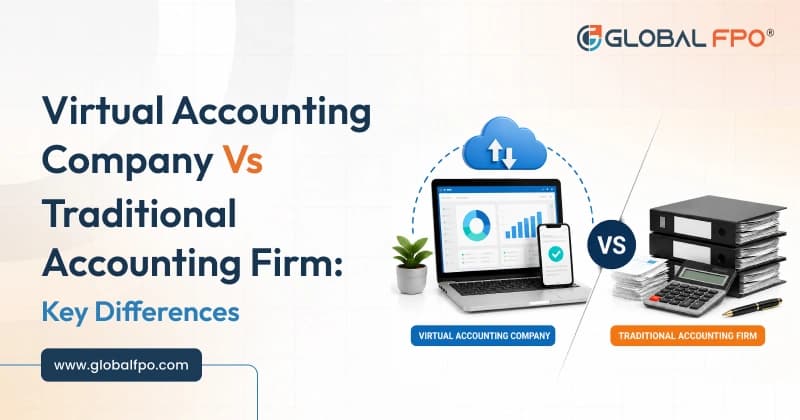
What Are the Key Differences Between Virtual Accounting Companies and Traditional Firms?

Although both models provide accounting expertise, they differ significantly in how services are delivered.

Feature Virtual Accounting Company Traditional Accounting Firm
Service Delivery Remote Primarily office-based
Access to Data Real-time cloud access Often limited by office workflows
Communication Email, video calls, portals In-person meetings and calls
Scalability Highly scalable May require additional resources
Document Sharing Digital Often a mix of digital and physical
Geographic Reach Global Frequently location-based

These differences can impact both efficiency and business growth.

Why Are Businesses Moving Toward Virtual Accounting Companies?

Business needs have changed significantly over the past decade. Companies now expect faster reporting, remote accessibility, and greater operational flexibility. Virtual accounting companies help address these expectations. Several factors contribute to their growing popularity.

Improved Accessibility

Financial information can be accessed from virtually anywhere. This is especially valuable for remote teams and multi-location businesses.

Real-Time Financial Visibility

Cloud accounting platforms provide immediate access to financial data. Business owners no longer need to wait for periodic updates.

Faster Collaboration

Teams can review reports, approve transactions, and share documents online. This helps streamline financial workflows.

Reduced Administrative Burden

Digital systems often automate repetitive accounting tasks. As a result, businesses spend less time on manual processes.

Also Check: Why Virtual Accounting Matters to Startups and Small Businesses

How Does Technology Impact Accounting Service Delivery?

Technology is one of the biggest distinctions between these models. Most virtual accounting companies rely heavily on cloud accounting software and automation tools.

Common technologies include:

  • Cloud bookkeeping platforms
  • Automated invoice processing
  • Digital expense management
  • Financial dashboards
  • Secure client portals
  • Bank feed integrations

These tools improve efficiency and reduce the likelihood of manual errors. An online accountant can often access and update financial information in real time. This allows businesses to make faster decisions based on current data.

Traditional firms may also use technology. However, their processes are often less integrated and less automated.

Which Option Offers Better Cost Efficiency?

Cost is often a deciding factor for business owners. A traditional accounting firm typically carries higher operational costs. These may include office expenses, administrative staff, and physical infrastructure.

In contrast, virtual accounting companies often operate with lower overhead. This can result in:

  • More flexible pricing
  • Reduced administrative costs
  • Scalable service packages
  • Better value for growing businesses

Companies looking to outsource accounting for virtual company operations often choose virtual providers because they can scale services without increasing internal costs.

How Do Virtual Accounting Companies Support Growing Businesses?

Growth creates new financial challenges. Businesses need accurate reporting, stronger controls, and better financial visibility.

A virtual accounting company can support these needs through flexible service models. As business requirements evolve, services can expand to include:

  • Advanced reporting
  • Budget forecasting
  • Cash flow management
  • KPI tracking
  • CFO support
  • Tax planning

This flexibility is particularly valuable for startups and rapidly growing organizations. Many businesses also choose accounting for virtual company operations because remote financial management aligns with modern business models.

Are Virtual Accounting Companies Secure?

Security is a common concern when financial information is managed remotely. Reputable virtual accounting companies invest heavily in data protection.

Security measures often include:

  • Data encryption
  • Secure client portals
  • Multi-factor authentication
  • Access controls
  • Regular system monitoring

In many cases, cloud-based systems provide stronger protection than locally stored records. Businesses should still evaluate a provider’s security practices before engagement.

Should Businesses Choose a Virtual Accounting Company or a Traditional Firm?

The answer depends on business needs. Choose a virtual accounting company if you need:

  • Remote access
  • Real-time reporting
  • Scalable services
  • Flexible support
  • Cost efficiency

Choose a traditional accounting firm if you prefer:

  • Frequent in-person meetings
  • Local office interactions
  • Traditional service delivery

For many modern businesses, virtual accounting companies provide greater flexibility and operational efficiency.

How Can Businesses Select the Right Accounting Partner for Long-Term Success?

The right accounting partner should support both current needs and future growth. Cost is important, but it should not be the only factor. Businesses should also consider expertise, technology, responsiveness, and service flexibility.

Many organizations now choose to outsource accounting for virtual company operations because it improves efficiency and scalability. As remote business models continue to expand, demand for online accountant services is also increasing.

With Global FPO, businesses gain access to experienced accounting professionals, cloud-based processes, and customized financial support. From bookkeeping and payroll management to tax preparation and financial reporting, Global FPO helps organizations streamline operations and build stronger financial foundations for long-term growth.

Looking for a Reliable Virtual Accounting Company?

Global FPO helps businesses simplify bookkeeping, payroll, tax preparation, and financial reporting through secure cloud-based accounting solutions. Let our experts manage your finances while you focus on growing your business.

Get Started Today

FAQs

Que: 1. What is a virtual accounting company?

Ans. A virtual accounting company provides accounting services remotely through cloud-based platforms and digital communication tools.

Que: 2. How do virtual accounting companies differ from traditional accounting firms?

Ans. The main difference is service delivery. Virtual providers operate remotely, while traditional firms often rely on office-based interactions.

Que: 3. Can virtual accounting companies handle payroll and bookkeeping?

Ans. Yes. Most virtual accounting companies offer bookkeeping, payroll processing, reporting, and tax support.

Que: 4. Is working with an online accountant secure?

Ans. Yes. Reputable providers use encryption, secure portals, and access controls to protect financial information.

Que: 5. Why do businesses choose accounting for virtual company operations?

Ans. Many businesses value the flexibility, accessibility, and scalability that remote accounting services provide.

Que: 6. Can startups benefit from virtual accounting services?

Ans. Yes. Startups often use virtual accounting services because they offer professional support without large overhead costs.

Que: 7. Is it a good idea to outsource accounting for virtual company operations?

Ans. In many cases, yes. Outsourcing can improve efficiency, reduce costs, and provide access to specialized expertise.

Que: 8. How does Global FPO support virtual accounting services?

Ans. Global FPO provides bookkeeping, payroll management, tax support, financial reporting, and advisory services through modern cloud-based systems.

Que: 9. Does Global FPO offer support beyond bookkeeping?

Ans. Yes. Global FPO also assists with financial analysis, tax preparation, compliance management, and strategic accounting support.

Que: 10. Why do businesses choose Global FPO as their accounting partner?

Ans. Businesses choose Global FPO for its experienced professionals, scalable service model, technology-driven approach, and commitment to financial accuracy and compliance.

Connect With Our Experts Today

Connect With Our Experts Today
skype-icon
Skype Call

Lets Connect

instagram-icon
facebook-icon
twitter-icon
linkedin-icon
youtube-icon