Future of Accounting: Why Outsourcing Is the Smart Move

Home icon-arrow Blog icon-arrow Future of Accounting: Why Outsourcing Is the Smart Move

Managing finances is becoming more complex every year. Businesses now face rising costs, tighter compliance rules, and growing reporting demands. That is why many companies are investing in outsourced accounting services to improve efficiency and support long-term growth.

Outsourcing accounting has evolved into a strategic business decision. Companies now use outsourced accounting to access financial expertise, advanced technology, and flexible operational support.

Modern accounting also looks very different from traditional finance management. Businesses want real-time financial visibility, automation, and faster reporting cycles. They no longer want accounting departments slowed by manual work and staffing limitations.

As accounting continues evolving, businesses that adopt smarter financial operations will gain a stronger competitive advantage.

Why Are Traditional Accounting Models Becoming Less Effective?

Traditional accounting structures worked well when businesses handled lower transaction volumes and simpler reporting requirements. Today, financial operations move much faster.

Companies now manage digital payments, remote teams, subscription billing, and stricter compliance standards. Internal accounting departments often struggle to keep up with these growing operational demands.

Hiring experienced accounting professionals has also become increasingly difficult. Skilled accountants remain in high demand, especially during tax and audit seasons.

Many businesses now face challenges such as:

Traditional Accounting Challenge Business Impact How Outsourcing Helps
Rising labor costs Increased operational expenses Reduces hiring and infrastructure costs
Staffing shortages Delayed financial reporting Provides access to skilled accounting professionals
Manual workflows Higher risk of errors Improves efficiency through automation
Employee burnout Lower productivity Reduces workload pressure on internal teams
Software maintenance costs Expensive upgrades Supports cloud-based accounting solutions

These challenges create operational pressure across finance departments.

This is where outsourced accounting creates a practical advantage. Businesses gain access to trained accounting professionals without managing recruitment, onboarding, or retention internally.

That flexibility has become increasingly important for growing businesses and CPA firms.

Why Is Outsourcing Becoming a Strategic Growth Decision?

Accounting is no longer only a back-office function. Businesses now expect finance teams to support strategic planning, forecasting, and operational decision-making.

That shift is changing how companies manage accounting operations.

Instead of building large internal departments, businesses now prefer leaner and more agile financial structures. Many companies use outsource accounting services to improve operational efficiency while keeping internal teams focused on core business goals.

By delegating routine accounting tasks, leadership teams gain more time for:

  • Revenue growth
  • Expansion planning
  • Client relationships
  • Strategic forecasting
  • Cash flow management
  • Operational improvements

This operational flexibility has become increasingly valuable for businesses managing rapid growth or changing workloads.

Industries like healthcare, ecommerce, construction, and professional services are already adopting outsourcing models to improve efficiency and long-term scalability.

What Are the Biggest Benefits of Outsourced Accounting?

Businesses choose outsourced accounting for several reasons beyond operational convenience. Modern outsourcing improves efficiency, visibility, and long-term financial management.

Here are the biggest advantages businesses gain from outsourcing accounting operations.

Significant Cost Reduction

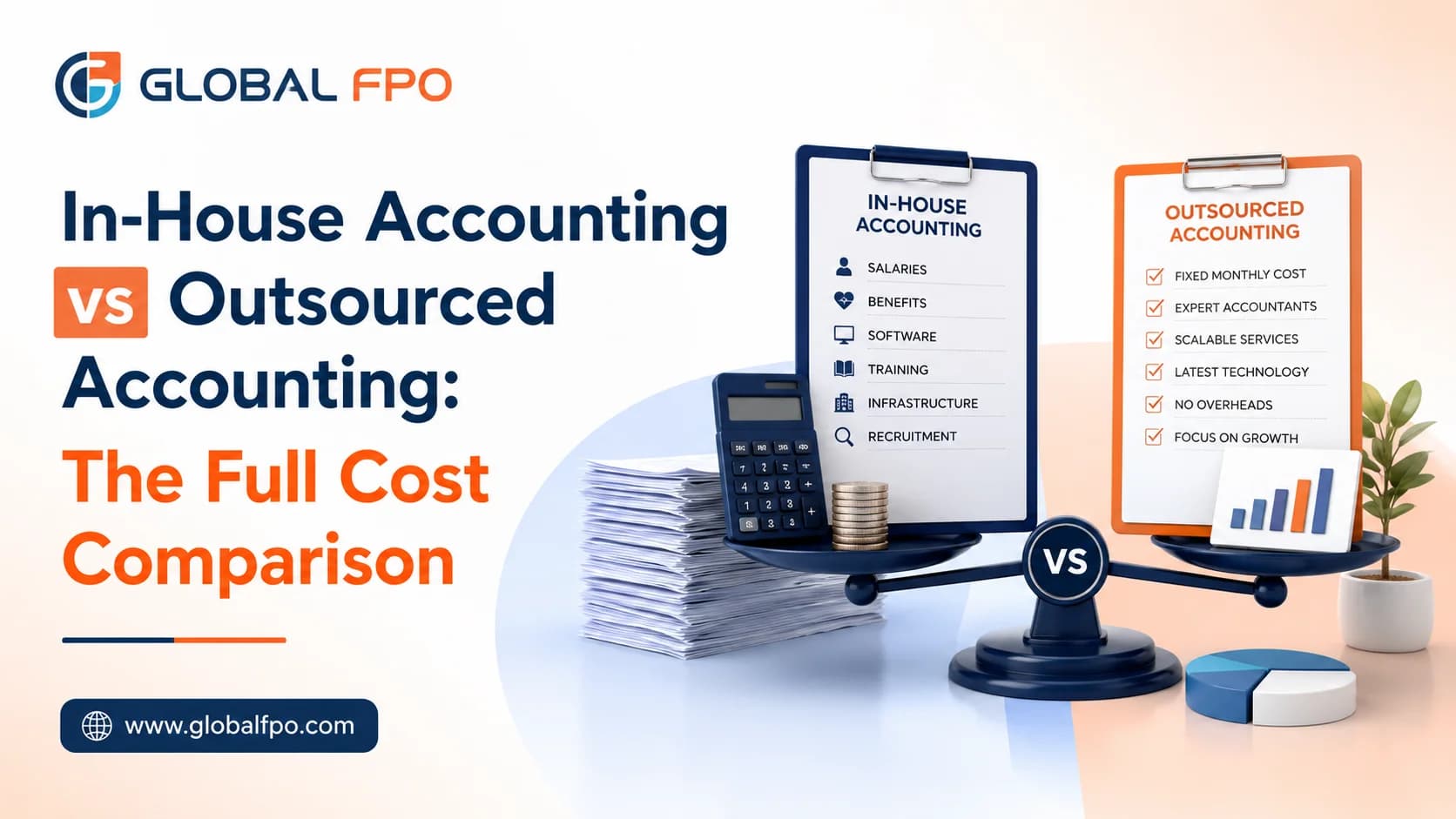
Internal accounting departments involve far more than salaries alone.

Businesses must also pay for:

  • Employee benefits
  • Office infrastructure
  • Accounting software
  • Hardware systems
  • Recruitment expenses
  • Ongoing staff training

These expenses increase significantly as businesses grow.

With outsource accounting services, companies reduce many of these operational costs while maintaining professional accounting support.

Outsourcing also creates more predictable financial planning because businesses only pay for the services they need.

Access to Specialized Expertise

Accounting regulations continue evolving every year. Businesses must stay updated on tax rules, reporting standards, payroll requirements, and compliance obligations.

Training internal teams continuously can become expensive and time-consuming.

By using outsourced accounting services, businesses gain access to experienced professionals who already understand modern accounting requirements and cloud-based systems.

Many providers also specialize in industry-specific accounting workflows. This improves reporting accuracy and operational consistency.

Real-Time Financial Visibility

Modern businesses need faster access to financial data.

Leadership teams now expect real-time visibility into:

  • Cash flow
  • Revenue performance
  • Expenses
  • Payroll costs
  • Outstanding invoices
  • Financial forecasts

Most outsourced accounting firms use cloud-based accounting systems that provide live dashboards and automated reporting tools.

This allows businesses to make faster and more informed financial decisions.

Enhanced Compliance and Accuracy

Accounting errors can create serious operational and financial problems. Mistakes may lead to penalties, audit complications, or reporting delays.

Experienced outsourced accounting firms use standardized workflows and quality control systems to reduce errors and improve compliance management.

This creates more accurate and reliable financial operations.

Flexible Support for Growing Businesses

Business workloads rarely remain consistent throughout the year.

Companies often experience:

  • Seasonal demand spikes
  • Expansion phases
  • New service launches
  • Increased transaction volumes
  • Hiring fluctuations

Managing these changes internally can place pressure on accounting teams.

With outsourced accounting, businesses can adjust support levels based on operational needs without restructuring internal departments.

This flexibility helps companies scale more efficiently. Deloitte’s 2025 Global Shared Services and Outsourcing Survey found that organizations are increasingly using outsourcing models to improve efficiency, access specialized expertise, and accelerate technology adoption.

Also Check: Finding the Right Accountant for Your Small Business

How Is Technology Reshaping the Accounting Industry?

Technology is transforming accounting operations faster than ever before. Businesses no longer rely only on spreadsheets and desktop software for financial management.

Today’s accounting environment depends heavily on cloud platforms, automation, and AI-driven reporting systems.

Many businesses now use:

Accounting Technology Primary Function Business Benefit
QuickBooks Online Cloud accounting Enables real-time access to financial data
NetSuite ERP and financial management Improves financial visibility and scalability
Xero Online bookkeeping Simplifies bookkeeping and reconciliation tasks
Bill.com Invoice automation Reduces manual invoice processing time
Sage Intacct Financial reporting Enhances reporting accuracy and financial insights
Gusto Payroll management Automates payroll and compliance management

These technologies improve reporting speed and reduce repetitive manual work. However, implementing and maintaining these systems internally requires expertise, training, and ongoing support.

That is another reason businesses choose to outsource accounting processes. Experienced outsourcing providers already understand cloud accounting platforms, automation workflows, and financial system integrations.

This allows businesses to benefit from modern technology without increasing internal operational pressure.

Automation also allows accounting teams to spend more time analyzing financial performance instead of handling repetitive data entry.

Why Are CPA Firms Increasingly Using Outsourced Accounting Services?

CPA firms face unique operational challenges during tax and audit seasons. Client expectations increase significantly during these periods, while internal bandwidth often becomes limited.

Managing seasonal demand with only in-house teams can reduce efficiency and increase turnaround pressure.

That is why many firms now rely on outsourced accounting services to improve capacity management and maintain service quality.

Outsourcing helps CPA firms:

  • Handle high-volume tax workloads
  • Improve turnaround times
  • Expand advisory services
  • Reduce staff burnout
  • Increase engagement profitability

This operational support allows firms to focus more on client relationships and higher-value advisory work.

As accounting becomes increasingly consultative, firms need more time for financial planning and strategic guidance instead of repetitive administrative tasks.

What Does the Future of Accounting Look Like in 2026 and Beyond?

The future accounting landscape will focus less on manual bookkeeping and more on strategic financial insights.

Businesses now expect accounting teams to provide operational guidance, forecasting support, and real-time financial analysis.

Here’s how the industry is evolving:

Traditional Accounting Future Outsourced Accounting Business Advantage
Manual bookkeeping focus Strategic financial advisory Supports proactive business planning and growth
Spreadsheet-heavy workflows AI-driven automation Improves efficiency and reduces manual errors
Reactive reporting Real-time financial insights Enables faster and smarter decision-making
Large internal staffing dependence Flexible outsourced support Reduces operational overhead and hiring pressure
Limited scalability Dynamic workload management Allows businesses to scale efficiently during growth

Businesses adopting technology-driven accounting models will likely operate more efficiently in the coming years.

Companies relying only on traditional internal systems may struggle with rising operational costs and limited flexibility.

How Can Businesses Choose the Right Outsourcing Partner?

Not every provider delivers the same level of expertise or operational support.

Businesses should look for outsourcing partners that integrate smoothly into existing workflows and operate like an extension of the internal finance team.

The ideal provider should offer:

  • Cloud ccounting expertise
  • Strong communication processes
  • Industry-specific experience
  • Secure data management
  • Scalable support models
  • Standardized reporting systems

Experienced outsourced accounting firms also help businesses improve workflow consistency and reporting accuracy while supporting long-term operational growth.

Also Read: How Much Do Bookkeepers Charge

How Does Global FPO Support Modern Accounting Operations?

Global FPO provides outsource accounting services tailored for growing businesses, CPA firms, and modern finance teams.

Their professionals support bookkeeping, payroll processing, reconciliations, tax preparation assistance, and financial reporting operations.

We combine accounting expertise with technology-driven workflows to improve operational efficiency and reporting accuracy. By using flexible accounting support models, businesses can reduce internal pressure while maintaining high-quality financial operations.

This allows companies to focus more on strategic planning, operational growth, and long-term business goals.

Build a More Scalable Accounting Model

The future of accounting is becoming more automated, technology-driven, and strategy-focused. Businesses now need financial operations that support faster decisions, stronger financial agility, and sustainable growth.

That is why more companies are investing in outsourced accounting services instead of expanding traditional in-house teams. Outsourcing gives businesses access to experienced professionals, cloud-based technology, and flexible operational support without increasing overhead costs.

More importantly, it allows leadership teams to prioritize expansion, customer experience, and strategic planning.

Partnering with experienced outsourced accounting firms can help businesses build a more efficient and future-ready financial operation.

Ready to Modernize Your Accounting Operations?

Discover how Global FPO helps businesses streamline accounting, reduce operational costs, and improve financial efficiency with scalable outsourced accounting solutions.

Explore Outsourced Accounting Services

FAQs

Que: 1. What are outsourced accounting services?

Ans. Outsourced accounting services help businesses manage bookkeeping, payroll, reporting, tax support, and reconciliations through external accounting professionals instead of internal finance teams.

Que: 2. Why are businesses using outsourced accounting?

Ans. Businesses use outsourced accounting to reduce overhead costs, improve efficiency, access specialized expertise, and focus more on growth and strategic planning.

Que: 3. Is outsourced accounting suitable for small businesses?

Ans. Yes. Outsource accounting services help small businesses access professional accounting support without hiring full in-house teams or increasing operational expenses.

Que: 4. How do outsourced accounting firms improve compliance?

Ans. Experienced outsourced accounting firms follow updated tax regulations, reporting standards, and quality control processes to reduce financial errors and compliance risks.

Que: 5. What accounting tasks can businesses outsource?

Ans. Businesses can outsource accounting tasks like bookkeeping, payroll, accounts payable, reconciliations, financial reporting, and tax preparation support.

Que: 6. How does technology improve outsourced accounting services?

Ans. Modern outsourced accounting services use cloud platforms and automation tools to improve reporting accuracy, operational efficiency, and real-time financial visibility.

Que: 7. What should businesses look for in outsourced accounting firms?

Ans. Businesses should choose outsourced accounting firms with industry expertise, secure workflows, cloud accounting capabilities, scalable support, and strong communication processes.

Connect With Our Experts Today

Connect With Our Experts Today
skype-icon
Skype Call

Lets Connect

instagram-icon
facebook-icon
twitter-icon
linkedin-icon
youtube-icon