Nobody starts an eCommerce business because they love reconciling transactions. Yet somehow, the books always end up keeping you up at night. Orders come in, payments get processed, dashboards show growth, and somewhere in that momentum, the finances quietly get out of hand. This is exactly where ecommerce bookkeeping becomes essential early on.
You are not just tracking revenue. You are managing multiple sales platforms, handling deductions from payment gateways, adjusting for returns, and aligning inventory with actual sales. Each of these elements directly impacts profitability.
Here is what this really means. If your numbers are scattered or delayed, your decisions will lack clarity. That is why many US-based businesses now rely on outsourced bookkeeping services for ecommerce businesses to build a system that keeps pace with growth.
Why is eCommerce Bookkeeping More Complex Than Traditional Bookkeeping?
eCommerce bookkeeping is complex because it pulls data from multiple systems that rarely align in real time.
Most US businesses sell across platforms like Shopify, Amazon, and Etsy. Each platform reports transactions differently, and payouts are released after deducting fees. This creates a gap between recorded revenue and actual cash received.
Returns and chargebacks further complicate the picture. These adjustments often occur after the initial sale, which means your books need continuous updates to stay accurate.
Inventory tracking adds another layer of complexity. Stock moves through procurement, storage, and fulfillment stages. If inventory costs are not recorded correctly, your cost of goods sold becomes unreliable.
To put it simply, you are dealing with:
• Multi-channel sales data
• Platform and payment gateway deductions
• Returns and refunds
• Inventory valuation and movement
• Multi-state sales tax compliance and IRS reporting
This is why bookkeeping for ecommerce requires structured systems rather than manual tracking.
What Are the Reasons to Outsource eCommerce Bookkeeping?
Outsourcing bookkeeping is not just about reducing workload. It improves how your financial data is managed and used.
1. Specialized Expertise
eCommerce involves reconciling payments from platforms like Amazon, Shopify, and Etsy. Each platform has its own fee structure, payout cycle, and reporting format.
Specialized providers understand how to handle these complexities. They accurately track commissions, fees, and returns while ensuring that your revenue reflects the true picture. They also manage tax compliance across multiple US states, including economic nexus obligations introduced by the South Dakota v. Wayfair ruling.
2. Accurate Inventory and Cash Flow Tracking
Inventory directly affects profitability. Without proper tracking, you may make decisions based on incomplete data.
Outsourced bookkeeping ensures:
• Accurate tracking of inventory costs and movement
• Proper recording of shipping and return expenses
• Clear visibility into unsold stock and working capital
Cash flow also becomes more transparent, helping you understand actual liquidity after deductions.
3. Scalability and Flexibility
eCommerce businesses experience seasonal fluctuations. Sales may spike during festive periods and slow down during off-seasons.
Outsourced services adjust to these changes:
• Scale operations during peak demand
• Reduce workload during slower periods
• Avoid fixed costs associated with full-time staff
This flexibility helps maintain efficiency without increasing overhead.
4. Improved Efficiency and Strategic Focus
Managing bookkeeping internally requires consistent effort. This often diverts attention from growth-focused activities.
By outsourcing, you can focus on:
• Marketing and customer acquisition
• Product expansion and innovation
• Enhancing customer experience
This shift improves overall business performance.
5. Compliance and Risk Management
Errors in financial records can lead to penalties and compliance issues. In the US, this is especially critical given complex multi-state sales tax laws, IRS reporting requirements, and 1099-K filing obligations.
Outsourced teams ensure:
• Accurate multi-state sales tax filings
• Proper 1099-K documentation and IRS compliance
• Consistent and audit-ready financial records
They also stay updated with regulatory changes — including evolving IRS thresholds and state nexus rules — reducing your compliance burden significantly.
6. Advanced Financial Insights
Outsourced bookkeeping provides more than just data entry. It delivers meaningful insights through reports such as:
• Profit and loss statements
• Balance sheets
• Cash flow forecasts
These reports help you evaluate performance and make informed decisions.
How Does Outsourced Bookkeeping Improve Cash Flow Management?
Cash flow is one of the biggest challenges in eCommerce. Revenue may look strong on reports, but actual cash availability often tells a different story.
This happens because:
• Payment gateways delay payouts
• Platform fees are deducted upfront
• Returns impact revenue after the sale
Outsourced bookkeeping tracks actual inflows and outflows instead of relying on gross sales figures.
This helps you:
• Understand real cash availability in USD
• Plan inventory purchases more effectively
• Avoid unexpected cash shortages
With structured ecommerce bookkeeping, you gain control over your finances instead of reacting to them. According to Deloitte, 83% of organizations are already leveraging AI as part of their outsourced services, showing how outsourcing is evolving beyond cost-saving into capability-building.
Is Outsourcing Bookkeeping More Cost-Effective Than Hiring In-House?
Hiring an in-house team involves fixed costs such as salaries, training, and software. It also requires finding professionals who understand eCommerce-specific accounting in the US market.
Outsourcing offers a more flexible approach. You pay for the services you need while gaining access to specialized expertise and systems.
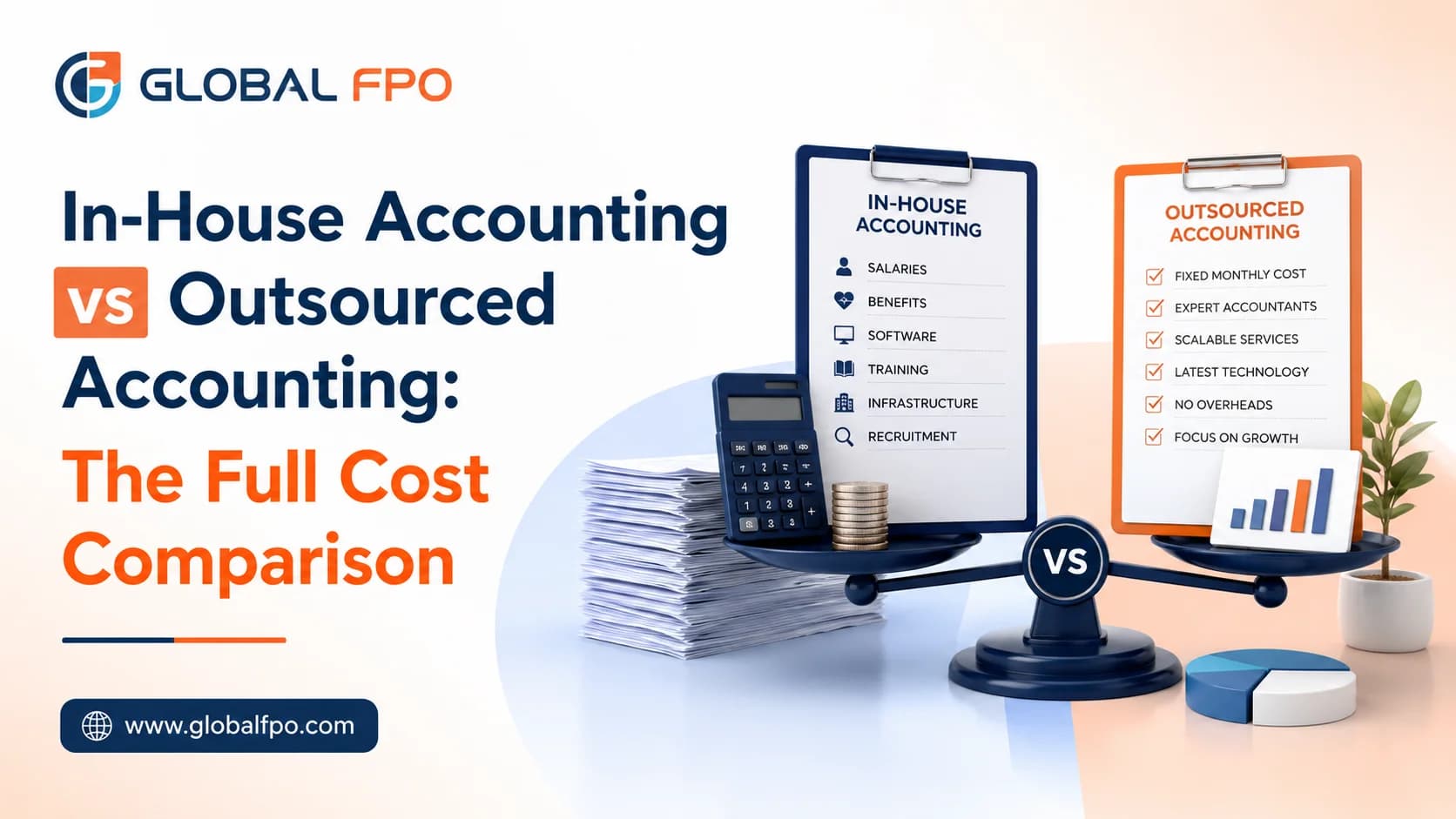
Here is a quick comparison:
| Aspect |
In-House Bookkeeping |
Outsourced Bookkeeping |
| Cost Structure |
Fixed salaries and overhead |
Flexible and scalable |
| Expertise |
Limited to hired staff |
Access to US eCommerce specialists |
| Scalability |
Difficult to adjust quickly |
Easily scalable |
| Tax Compliance |
Depends on internal knowledge |
Multi-state sales tax & IRS ready |
| Accuracy |
Depends on internal processes |
Structured and consistent |
| Focus |
Diverts time from growth |
Frees up business focus |
Outsourcing also reduces the cost of financial errors, which can impact decision-making and profitability.
How Does Outsourcing Help eCommerce Businesses Scale?
Scaling an eCommerce business increases transaction volume, inventory complexity, and reporting requirements.
Manual systems often struggle to keep up with this growth. Errors increase, and financial visibility decreases.
Outsourced bookkeeping supports scaling by:
• Managing high transaction volumes efficiently
• Maintaining consistent reporting accuracy
• Integrating tools and systems for automation
This ensures that your financial operations grow alongside your business.
What Should You Look for in Outsourced Bookkeeping Services for eCommerce Businesses?
Choosing the right partner goes beyond basic bookkeeping. You need expertise, system compatibility, and reporting that actually helps you make decisions.
You should look for providers that offer:
• Experience with Shopify, Amazon, and other major US platforms
• Strong reconciliation processes
• Clear and actionable financial reports
• Multi-state sales tax compliance and IRS filing expertise
• Scalable systems and software integrations (QuickBooks, Xero)
A reliable partner does not just maintain records. They help you understand and use your financial data effectively.
Ready to Simplify Your eCommerce Finances and Scale with Clarity?
Outsourcing your bookkeeping is a strategic decision that brings structure to your financial operations. It ensures accuracy, improves compliance, and provides insights that support growth.
When your numbers are reliable, your decisions become more confident. You can focus on expanding your business while your financial systems run efficiently in the background.
This is where Global FPO can support your journey. With experience in managing complex bookkeeping for ecommerce businesses across the United States, Global FPO helps businesses streamline financial processes, maintain compliance, and gain meaningful financial insights.
The result is simple. Better control, clearer visibility, and a stronger foundation for growth.
FAQs
Que: 1. What is eCommerce bookkeeping?
Ans. eCommerce bookkeeping involves tracking, reconciling, and managing financial data from online sales channels, payment gateways, and inventory systems.
Que: 2. Do I need a bookkeeper for my online business?
Ans. Yes, a bookkeeper ensures accurate financial records, helping you manage cash flow, taxes, and business performance effectively.
Que: 3. How do you handle bookkeeping for multiple sales platforms?
Ans. By reconciling data from each platform, tracking fees, and consolidating reports into a single financial system.
Que: 4. What are the benefits of outsourcing bookkeeping?
Ans. Outsourcing improves accuracy, saves time, ensures compliance, and provides expert financial insights for better decision-making.
Que: 5. How often should eCommerce bookkeeping be updated?
Ans. It should be updated regularly, ideally weekly or monthly, to maintain accurate and current financial records.
Que: 6. Can outsourced bookkeeping help with US sales tax compliance?
Ans. Yes, it ensures accurate multi-state sales tax filings, proper documentation, economic nexus tracking, and adherence to changing IRS and state tax regulations.
Que: 7. What software is used for eCommerce bookkeeping?
Ans. Common tools include QuickBooks, Xero, and platform integrations that sync sales and financial data automatically.
Que: 8. How does bookkeeping impact profitability?
Ans. Accurate bookkeeping helps identify costs, track margins, and optimize pricing and expenses for better profitability.
Que: 9. What makes Global FPO suitable for eCommerce bookkeeping?
Ans. Global FPO offers specialized expertise, scalable services, and accurate financial reporting tailored for US-based eCommerce businesses.
Que: 10. Does Global FPO handle compliance and reporting?
Ans. Yes, Global FPO manages multi-state sales tax compliance, IRS reporting requirements, maintains accurate records, and provides detailed financial reports for informed decision-making.